
From Fit-Out to Future-Proof: Designing Workspaces That Don't Become Waste
In Australia's flexible workspace market, fit-outs are often replaced well before the end of their functional life. Designing for reuse, adaptability and long-term performance is becoming a question of both sustainability and long-term value.
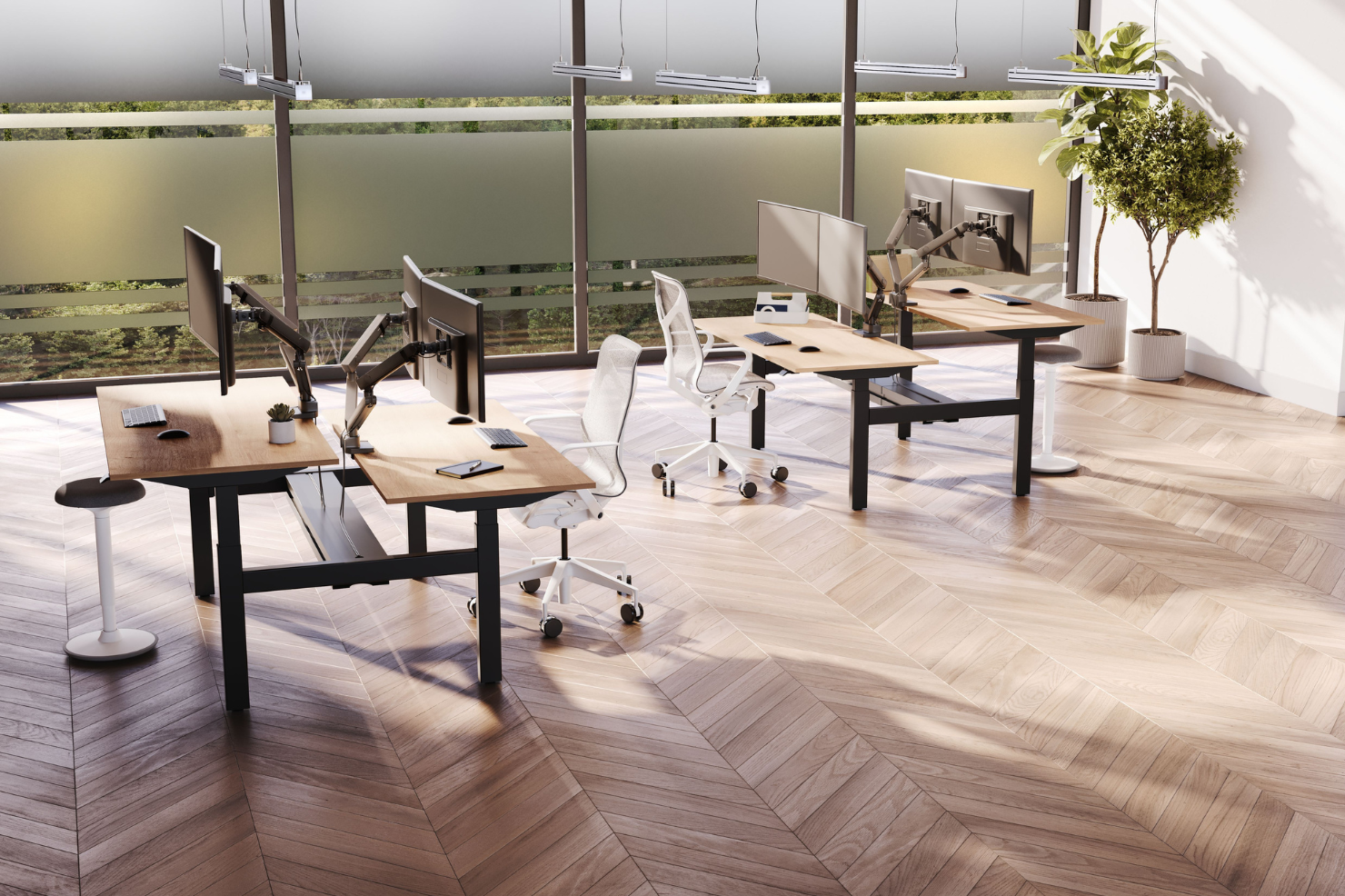
In Australia's flexible workspace market, change is constant.
Spaces are reconfigured to suit new tenants, refreshed to remain competitive, or redesigned to reflect evolving workplace expectations. This level of activity is expected, but it also comes with a less visible consequence.
Fit-outs can be replaced well before the end of their functional life.
For operators and asset owners, this is not only a sustainability consideration. It is increasingly a question of long-term value.
Looking beyond the initial fit-out
Fit-out decisions are typically driven by speed, cost, and visual outcome. These are all valid priorities, particularly in a competitive market where time to occupancy matters.
However, the longer-term implications are often less considered.
Across the property and fit-out sector, refurbishment cycles can be shorter than the intended lifespan of furniture and components. As a result, when a space is reconfigured:
- Furniture may be removed rather than adapted, particularly where it was not designed for reconfiguration
- Assets with remaining functional life can be replaced earlier than expected
- New investment is required to deliver a similar functional outcome, rather than building on existing infrastructure
Over time, this can create a pattern of replacement rather than reuse.
In a market like Australia, where construction, labour, and logistics costs are comparatively high, this approach can influence both operating costs and asset performance over time.
A shift towards lifecycle thinking
Across the built environment, there is a growing focus on lifecycle performance and material efficiency.
Organisations such as the Green Building Council of Australia and Infrastructure Sustainability Council continue to promote lifecycle-based design decisions, waste reduction, and improved material transparency.
National data highlights the scale of the challenge.
Australia generated approximately 75.6 million tonnes of waste in 2022–23, including around 26.8 million tonnes from construction and demolition activities, making construction and demolition waste one of the largest waste streams in the country.
Within this broader category, refurbishment and fit-out activities contribute to material waste. In Sydney's CBD alone, approximately 400,000 square metres of office space is refitted each year, generating an estimated 55,000 tonnes of strip-out waste annually.
Industry data also shows that a significant proportion of this material is not recovered. Diversion rates remain relatively low, with only around 20–21% of fit-out waste reused or recycled, while the majority is sent to landfill.
At the same time, tenant expectations are evolving. ESG commitments, workplace wellbeing, and flexibility are increasingly influencing leasing decisions, particularly in premium and shared environments.
Together, these shifts are changing how workspaces are evaluated. The question is no longer only how a space performs at launch, but how it performs over time.
What designing for reuse involves
Designing for reuse does not require a complete change in approach. It is a matter of making more considered decisions at the specification stage.
Design for disassembly enables workstations to be taken apart, adjusted, and reassembled without compromising structural integrity.
Separating long-life and short-life elements allows components such as frames and lifting systems to remain in use longer than surfaces or finishes.
Enabling adaptability supports different ways of working — focused, collaborative, seated, or standing — so spaces can be reconfigured as needs change.
Selecting durable, serviceable components helps ensure that the elements not immediately visible continue to perform over time.
Reuse in practice
A recent collaboration between LINAK and Holmris B8 demonstrates how these principles can be applied in practice.
The project focused on extending the life of existing workstations by recovering and refurbishing core components, reusing structural elements across new layouts, and maintaining performance while reducing the need for new materials.
While this example is based in Europe, the approach is applicable to the Australian context, particularly where replacement costs and logistics can be high.
Why this matters locally
Australia presents a distinct set of conditions.
Fit-out and refurbishment costs are higher than in many global markets.
Geographic distance increases the impacts of transport and logistics. At the same time, there is a growing emphasis on ESG outcomes across both public and private sectors.
Industry bodies such as the Property Council of Australia and Australian Sustainable Built Environment Council continue to highlight the importance of improving resource efficiency and reducing waste across the built environment.
In this context, designing for reuse can support more efficient use of capital over time, reduce waste and disposal requirements, facilitate faster transitions between tenants, and align with sustainability frameworks and certifications.
These are practical considerations that influence both operational performance and long-term asset value.
The role of movement in long-term performance
Workplace expectations continue to evolve, particularly regarding health, ergonomics, and flexibility.
Workstations that support movement, such as sit-stand functionality, are increasingly common in premium environments. They also contribute to longevity.
When a workstation can adapt to different users and working styles, it is less likely to become outdated or replaced prematurely.
The systems that enable this movement are therefore not only functional components but also part of the long-term value of the workspace.
A practical starting point
For designers, operators, and asset owners, designing for future use begins with a shift in perspective.
- Can this workstation be reconfigured rather than replaced?
- Which components are expected to last beyond the initial fit-out?
- How easily can the space adapt to a different tenant or layout?
- What is the cost difference between reusing and replacing?
These considerations can be addressed early in the design process without adding complexity to delivery timelines.
Conclusion
Flexible workspaces are designed to change. The challenge is ensuring that the underlying infrastructure can change with them.
Designing for reuse, adaptability, and long-term performance supports more efficient investment, reduced environmental impact, and greater flexibility over the asset's life.
In practice, this means moving beyond a replacement mindset and towards a lifecycle-based approach.
The most effective workspace is not only one that performs well at launch but also one that continues to perform, even as it evolves.
References
- Department of Climate Change, Energy, the Environment and Water — National Waste Report
- Better Buildings Partnership — Strip-out Waste
- Better Buildings Partnership — Strip-out Waste Guidelines
- Green Building Council of Australia
- Infrastructure Sustainability Council
- Property Council of Australia
- Australian Sustainable Built Environment Council
Nirma Ledford
LINAK Marketing
Related articles
Industry newsletter
Stay ahead of the flex curve
Join Australia's flexible workspace community and get the latest industry news, research, events and member-only offers delivered straight to your inbox.
- Monthly industry insights & research
- Early access to events and offers
- News from members, sponsors and partners