
How the Modern Workplace Must Change
The modern workforce has outgrown our current workspaces. For most organizations, employees’ needs are very different today than they were even just five years ago. The nature of these changes is more
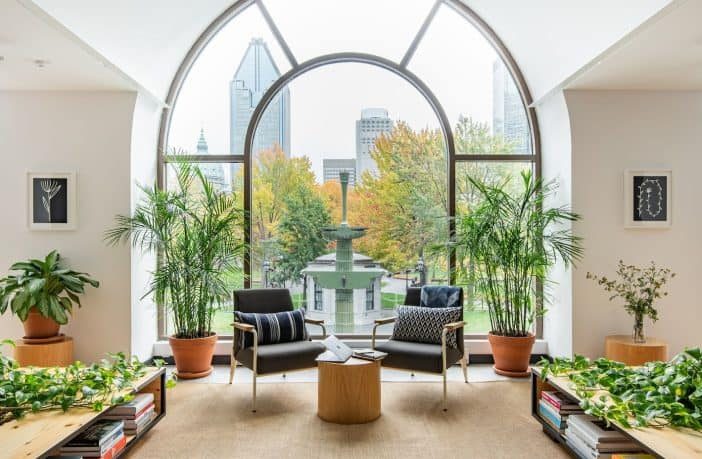
The modern workforce has outgrown our current workspaces. For most organizations, employees’ needs are very different today than they were even just five years ago.
The nature of these changes is more significant than most people realize, and the industry is about to face a radical transformation. In particular, effective coworking spaces will be essential to the future of the workplace.
The problem with existing workplaces
Before the COVID-19 pandemic, few people questioned the need to commute to work five days a week, and it was assumed that every employee needed their own designated office or cubicle. Consequently, employers were expected to have large headquarters where employees were required to report in person to fulfill their responsibilities each day.
Widespread and long-lasting lockdowns changed all that. Due to the increase in remote work, most people now realize that commuting to work constitutes a considerable waste of time and effort. And having discovered the benefits of a healthier work-life balance, many employees aren’t willing to go back despite some employers’ increasingly strident return-to-the-office mandates.
This shift has several implications for the future of the workplace.
Smaller, more flexible, decentralized offices
First of all, since much remote work has demonstrated its effectiveness, many organizations can afford to scale back their office-space footprint, as today’s more mobile staff can rotate in and out of a single shared office at need. Large centralized headquarters are also no longer a necessity for many businesses that would benefit from taking a more distributed approach, creating multiple smaller offices in a wider range of geographic regions.
But that’s not the only way the modern workplace should change. For people to return to the office willingly, organizations must attract them, making the commute worth their while. This can be done by supporting the human side of work.
Workplaces that support the human side of work
Employers can encourage employees to return to the workplace by helping them connect, exchange knowledge, provide and receive mentoring, and share a sense of purpose. In practical terms, this means designing workplaces to be more versatile, with fewer desks but more varied spaces that promote meaningful connections and exchanges among people.
Instead of corporate buildings that have tenants and just a few floors of coworking, we should reconceive them as communal hotels, bars, restaurants, conference centers, and entertainment zones with small pockets of privately leased tenant space. Essentially, the workplace of the future should operate as an ecosystem that drives the efficient use of resources to maximum potential, and effective coworking spaces will be key in this transformation.
Growing the coworking trend to the next level
Coworking is just getting started. Many of today’s tenants want to use office space only when they need it. They also want to have people run it who know how to create a great experience. For this reason, I foresee coworking operators running more and more office-building spaces and offering an increasingly wide range of spaces and services.
However, I do not expect coworking to take hold everywhere. It will only be successful in those buildings with the right location that offer the right spaces that people actually want, such as restaurants, bars, event spaces, and other amenities that aren’t available at home.
Coworking offices should also embrace connecting and workflow technology with AI enablement, since these cutting-edge technology tools nudge and drive purpose and connection. For those ventures that need to shield proprietary or other confidential information, tenants can easily ensure privacy by having their own core space while utilizing the coworking space to connect with others.
A fundamental shift
Providing workplaces that meet the needs of today’s workforce will require a fundamental shift in how we view and design them, which is why coworking operators and landlords should change their business model to promote human connection. While the demand is there, the supply has not yet been adequately developed.
The future will reward those workplaces that create spaces within in-person environments that are so valuable, people can’t afford to not be there.
This article first appeared on Coworking Insights here.
JOIN
FLEXIBLE WORKSPACE AUSTRALIA
Flexible Workspace Australia is the peak body for coworking and flexible workspace providers and partners across all cities and regions of Australia.
FWA Editorial
Editorial Team
Related articles
The Community Manager's AI Toolkit: Save Hours, Work Smarter
Managing a coworking space is rarely just one job. You're the welcome committee, the content creator, the event planner, the inbox wrangler, and the person members call when the Wi-Fi goes down. The g

9 Key Benefits of Joining a Coworking Community
If you've been working from home alone for a while, or you're tired of paying for a full office lease your small team doesn't need, you've probably started wondering whether there's a better way. Ther
What Is a Coworking Space? Your Complete Guide to Modern Flexible Workspaces
The traditional office is no longer the only option for getting work done. Whether you're a freelancer, startup founder, remote worker, or small business owner, coworking spaces offer a compelling alt
Industry newsletter
Stay ahead of the flex curve
Join Australia's flexible workspace community and get the latest industry news, research, events and member-only offers delivered straight to your inbox.
- Monthly industry insights & research
- Early access to events and offers
- News from members, sponsors and partners